
helium recovery system
Helium Recovery Systems for Quantum Computing Facilities: A Practical Scoping Guide
Is a helium recovery system relevant to your facility?
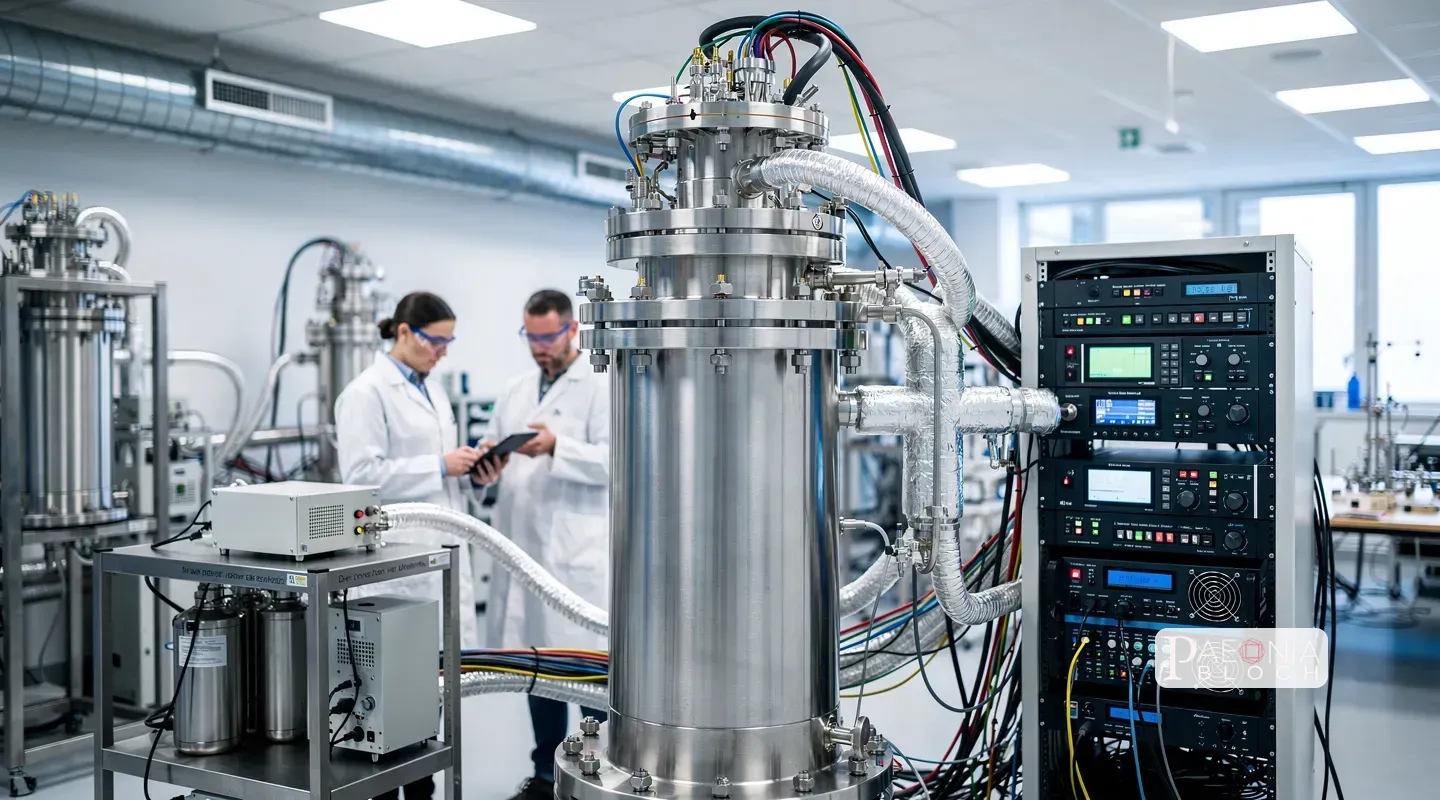
A helium recovery system is relevant to your facility when you use liquid-helium equipment that releases boil-off gas and you need a path to collect, compress, purify, and reuse that gas.
Start with the equipment you already operate or plan to install. If your experiments depend on liquid helium, recovery may be part of the facility infrastructure. If your main requirement is sub-kelvin cooling without liquid helium or helium-3, the more direct question is whether a helium-3-free cryostat fits the experiment.
That distinction matters for quantum-computing facilities in Singapore and across ASEAN. Recovery manages helium used elsewhere in the facility. A helium-3-free cryostat provides a different cooling route. The two decisions can exist in the same research program, but they should not be treated as interchangeable.
Use this guide to map your helium flow, identify the equipment that creates or receives it, and prepare supplier questions. Do not begin with a recovery package or cryostat model. Begin with the operating requirement.
What does a helium recovery system do?
A helium recovery system handles helium gas from equipment that uses helium. Typical systems combine collection lines or manifolds, compression, purification, storage, liquefaction, and monitoring and control equipment. The purpose and arrangement depend on the connected equipment and the facility’s recovery path.
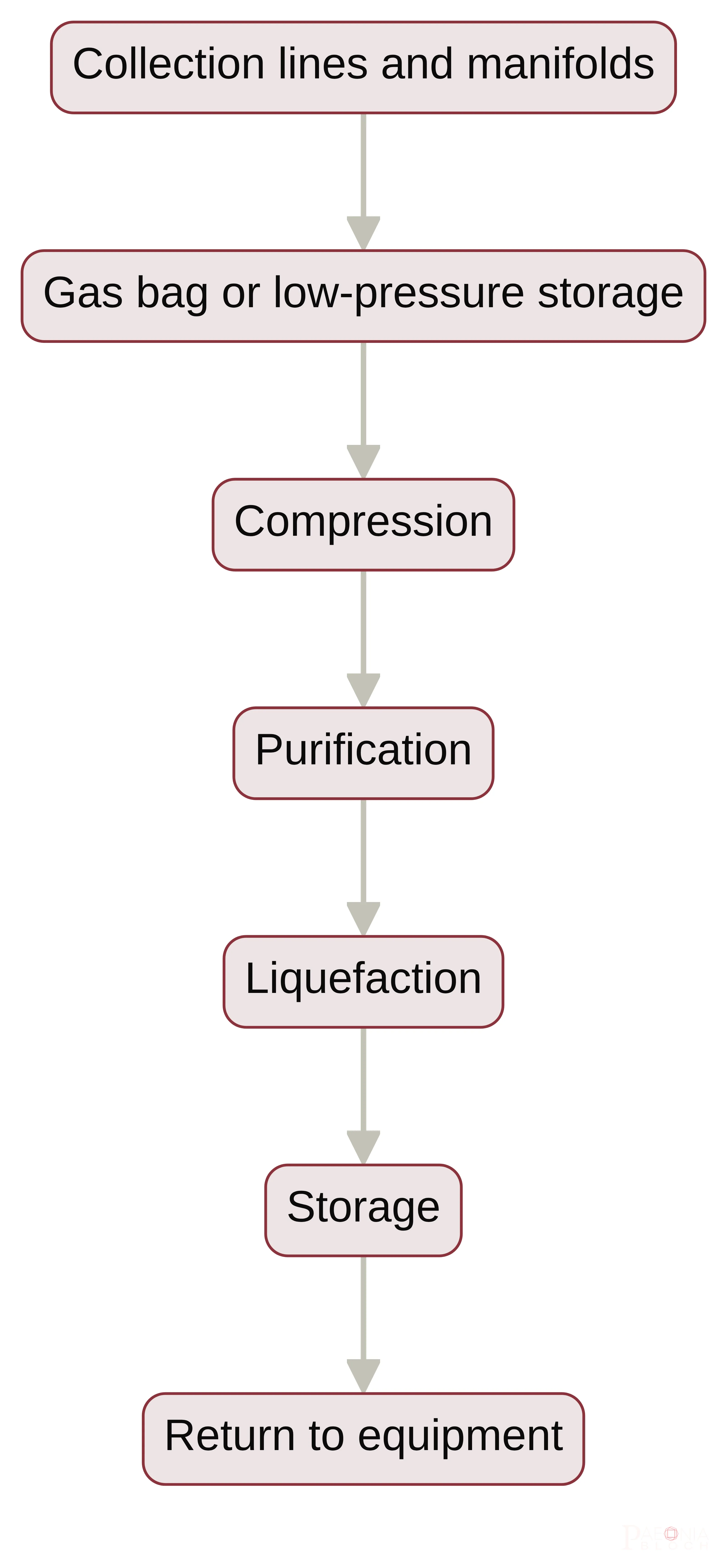
A general component flow is:
- Collection lines or manifolds receive gas from connected points.
- A gas bag or tank holds collected gas before or during compression.
- Compressors raise pressure for storage in cylinders or other vessels.
- Purification equipment removes impurities.
- A liquefier converts gas back to liquid helium when that stage is part of the facility.
- Storage and control equipment support holding and monitoring the gas or liquid.
One cited Cryomech description documents a path that collects boil-off gas from a liquid-helium cryostat, stores it in an atmospheric bag, compresses it into pressurized cylinders, purifies it, and sends it to a helium plant for liquefaction and storage. That example explains the function of recovery equipment; it does not prescribe a layout for your facility.
For scoping, start with the equipment connected to the path, the locations where helium is released, the storage stage required, and whether liquefaction and reuse are part of the plan. These questions concern helium infrastructure.
Our helium-3-free cryostats address a different requirement: magnetic cooling for the sub-kelvin stage without liquid helium or helium-3. The first distinction is therefore functional: are you managing helium already used by facility equipment or selecting cooling equipment that does not require liquid helium and helium-3?
What happens to the helium after collection?
The post-collection helium path normally moves from temporary gas storage to compression, purification, and either storage or liquefaction. The recovered gas is not ready for every use simply because it has been collected; its pressure, purity, and destination must be addressed as separate parts of the process.
One published process describes low-pressure gas entering a gas balloon, moving through recovery compressors, and then entering 200-bar multi-cylinder packs. A liquefier later converts the gas back to liquid helium, which is held in a 2,000-liter liquid-helium dewar before redistribution to experimental areas. Those figures describe that published installation, not a general sizing rule.
Cryomech’s recovery-system description states that its purified gas exceeds 99.999% helium before it is supplied to a helium liquefaction plant. Treat that value as a specification for the cited system description, not as a default purity level for every installation.
For your facility, ask where the recovered gas goes after compression. It may be sent to an on-site liquefier, held for later transfer, or routed through another approved part of the helium infrastructure. The answer affects storage, controls, pressure management, and the information a supplier needs from you.
Our role is different at the cryostat level. We distribute Kiutra cryostats in ASEAN and provide quotation, import, installation support, and local service for those systems; that scope does not turn a cryostat into a helium recovery plant.
Which components make up the recovery path?
The physical recovery path combines several component groups, each with a different job. Typical groups include collection, compression, purification, storage, liquefaction, and monitoring equipment.
Collection and gas handling
Pipelines, manifolds, valves, and connection points bring boil-off gas from the source equipment to the collection point. Your map should show every planned source, the distance to the collection point, and any equipment that may be connected later.
Compression and storage
Compressors move gas from low-pressure collection into storage vessels. Storage may include gas bags, cylinders, tanks, or multi-cylinder packs. The supplier needs to match the proposed pressure and storage arrangement to the gas flow and operating schedule rather than treating storage as an afterthought.
Purification and liquefaction
Purification removes impurities before the gas reaches the intended reuse stage. A liquefier then returns gaseous helium to liquid form when the facility includes that equipment or sends the gas to a separate liquefaction path.
Monitoring and control
Monitoring may cover flow, pressure, purity, and operating status. Controls also form part of the operating and safety discussion. Ask how alarms, shutdowns, access, and routine checks fit your facility’s procedures.
Cryogenic wiring is adjacent equipment, not a recovery component. We distribute Delft Circuits Cri/oFlex® cryogenic flex cabling in ASEAN for qubit control, readout, and other low-temperature experiments. We specify that cabling per cryostat and experiment, so keep wiring as a separate scope line when you plan a quantum-computing installation.
What do published systems show—and what do they not prove?
Published installations show that recovery can serve more than one liquid-helium application, but each example must be read in its own facility context. The connected instruments, collection layout, storage method, and reuse path all affect the design.
The University of Delaware NMR Facility describes a system installed in 2021 that collects boil-off from NMR magnets, compresses the gas into storage tanks, purifies and reliquefies it in the laboratory, and returns the recycled helium to the magnets. The facility reports recovering more than 90% of its helium consumption. That percentage is a facility-specific report, not a general recovery rate.
Quantum Technology describes a Guelph, Ontario, installation completed in May 2023 that connects six superconducting NMR spectrometers to a centralized collection point. The reported process captures evaporated helium, purifies it, reliquefies it, and reuses it.
A separate documented process uses a gas balloon, 200-bar multi-cylinder packs, a liquefier, and a 2,000-liter liquid-helium dewar. Together, these examples show the range of equipment that can appear in a recovery path. They do not give you a basis for selecting storage volume, compressor capacity, recovery percentage, or operating cost.
Use published examples to build questions, not to copy a design. We provide installation and commissioning support for products in our scope, but the facility layout and equipment connections still need a project-specific discussion.
What facility conditions determine whether recovery is worth investigating?
Your facility’s helium map determines whether recovery deserves a detailed investigation. The first question is not how large a package you need; it is how helium enters, moves through, and leaves your operation.
Prepare these details:
- Helium sources: List each liquid-helium cryostat, magnet, dewar, or other equipment that releases boil-off gas.
- Recovery points: Mark where gas can be collected and whether several instruments could connect to a shared collection route.
- Gas flow: Record the operating pattern, expected boil-off, planned fills, and periods when equipment is idle. A supplier can then discuss the relevant flow range without assuming that every instrument operates at the same rate.
- Loss points: Identify transfers, vents, temporary connections, and other points where gas may leave the intended path. Ask how each point should be handled rather than assuming every loss can be recovered.
- Storage needs: Describe where gas or liquid helium could be stored, what access is available, and how storage fits your operating schedule.
- Reuse path: State whether you expect on-site reliquefaction, storage for later use, or another approved route.
- Operating responsibility: Identify who will monitor pressure, purity, alarms, and routine operation, and what training is expected before use.
Separate normal operation from unusual events. Note which equipment runs continuously, which operates only during campaigns, and when fills, transfers, or maintenance create peak demand. Also mark whether the recovery path would serve one instrument or several. These distinctions help a supplier discuss collection and storage assumptions without treating every facility as identical.
The equipment mix also matters. A facility that plans a helium-3-free cryostat may be addressing its sub-kelvin experiment without adding liquid-helium equipment to the recovery map. Our wiring is also specified per cryostat and experiment, so include the planned cryostat and measurement requirements when you prepare an adjacent equipment scope.
This checklist helps you decide whether to investigate recovery. It does not size the system or determine whether a particular arrangement is compatible with your building.
Which questions should you ask a supplier before requesting a proposal?
A supplier discussion should turn your facility map into clear technical and operational questions. Use the questions below to compare scopes without asking for a design before the basic conditions are known.
Questions about the helium flow
- Which equipment will connect to the collection network?
- Where are the proposed collection points, and how will future equipment be added?
- What gas flow range and pressure conditions should the system handle?
- Which transfers or vents remain outside the recovery path?
Questions about purity and reuse
- What purity is required at the liquefier inlet or other reuse point?
- Which purification method is proposed, and how is purity monitored?
- Will the gas be reliquefied on site, stored as gas, or sent to another facility or plant?
- What storage vessels, pressure ratings, and transfer connections are included?
Questions about operation
- Which readings does the control system monitor?
- What alarms and shutdown actions are included?
- Who operates the system during normal work, maintenance, and an interruption?
- What training from a competent person is required before your team operates cryogenic or high-magnetic-field equipment? Cryogenic operating guidance recommends that training before operation.
Questions about the wider experiment
- Does the project need liquid-helium recovery, sub-kelvin cooling without liquid helium, or both?
- Which cryostat, measurement wiring, and control interfaces must be considered together?
- What installation, commissioning, and local support activities are included?
Ask the supplier to separate included equipment, site interfaces, operating assumptions, and items that remain your facility’s responsibility. Request the proposed collection points, storage path, purity checks, training arrangements, and support boundaries in terms your technical and facilities teams can review together. That format makes a later comparison clearer without turning a published example into a design template.
We distribute Kiutra cryostats in ASEAN and provide quotation, import, installation support, and local service. Bring the same facility information to that discussion that you would bring to a recovery supplier: equipment, experiment, operating pattern, building constraints, and support needs.
Before requesting a proposal, sort your notes into three decisions:
- Is there a liquid-helium source? Name the cryostat, magnet, dewar, or other equipment that releases boil-off gas. If no connected equipment uses liquid helium, ask why recovery belongs in this project rather than assuming that a quantum-computing facility needs it.
- Can the gas be collected? Mark each proposed source, collection point, connection, and known loss point. A list of instruments without a collection path is not yet a recovery scope.
- What happens after collection? State whether the intended path includes compression, purification, storage, liquefaction, or reuse through another facility route. If the destination is unknown, make that an open supplier question.
This gives you a practical screening rule: recovery merits detailed scoping when the facility has liquid-helium equipment, can describe where boil-off may be collected, and has a credible reuse or storage path to discuss. If one of those conditions is missing, the next step is to resolve that missing condition, not to infer a package size or expected result.
When comparing supplier responses, use the same headings for each response: connected equipment, collection boundaries, gas storage, compression, purification, liquefaction, monitoring, training, site interfaces, and support. Mark each item as included, excluded, or requiring facility information. This makes differences visible even when two responses use different names for similar component groups.
For a project that also includes a helium-3-free cryostat, keep a second decision line beside the recovery screen: what temperature and experiment requirement must the cryostat address, and which wiring and installation questions belong to that cryostat? The recovery answer should not be used as evidence that the cooling path is suitable, and the cooling choice should not be used as evidence that a recovery network is needed.
Finally, record unresolved items with an owner—research, facilities, engineering, or supplier—and carry them into the technical discussion. That creates a clear boundary between information you have supplied and suitability questions that require qualified review.
How is recovery different from helium-3-free sub-kelvin cooling?
Helium recovery and helium-3-free sub-kelvin cooling solve different equipment problems.
The distinction can be expressed as two separate questions:
| Question | Liquid-helium recovery path | Helium-3-free cryostat path |
|---|---|---|
| What does it manage? | Boil-off gas from connected liquid-helium equipment | Cooling for an experiment at the sub-kelvin stage |
| What is the starting condition? | Your facility already uses, or plans to use, liquid helium | Your experiment needs sub-kelvin temperatures without liquid helium and helium-3 |
| What does the infrastructure include? | Collection, compression, purification, storage, and possibly liquefaction | A helium-3-free cryostat for sub-kelvin cooling |
| What should you scope first? | Helium sources, flow, collection points, storage, purity, and reuse | Experiment requirements, cryostat configuration, wiring, installation, and support |
We identify sub-kelvin temperatures as needed for characterization, detector, optical, and materials experiments, as well as fast turnaround, automated operation, or removing helium-3 from purchasing and running costs entirely. This scope describes the situations covered by our cryostat guidance; it does not make every sub-kelvin experiment a fit for the same equipment.
We distribute Kiutra cryostats in ASEAN. If your project needs a different cooling route from liquid-helium equipment, discuss that route separately from any recovery infrastructure.
Where do cryogenic wiring and support fit?
Cryogenic wiring and support belong in the wider experiment scope, not inside the helium recovery flow. Recovery handles helium movement; wiring carries signals between the experiment and its cryogenic stages.
Our Cri/oFlex® cabling is used for qubit control and readout and for other low-temperature experiments. We specify wiring per cryostat and experiment, then confirm compatibility with both manufacturers before quoting. That means your wiring discussion should include the cryostat, signal requirements, connector arrangement, and measurement plan rather than a cable name alone.
For a superconducting-qubit setup, keep signal and readout requirements beside the cryostat scope from the start. The recovery path may be in the same building, but it does not define the wiring arrangement. Treat the gas network, cryostat interfaces, and measurement cabling as related project scopes with separate technical questions.
Support has several separate parts:
- Installation and commissioning: We provide support for product installation and commissioning.
- Regional contact: We are the support contact for Kiutra systems in ASEAN.
- Training: Ask what training is required for the equipment you will operate. Cryogenic operating guidance recommends training from a competent person before operating cryogenic or high-magnetic-field equipment.
When recovery and sub-kelvin equipment appear in the same project, keep their scopes visible. A shared project plan may be useful, but it should show which supplier is responsible for the recovery path, the cryostat, the wiring, installation, commissioning, and operator preparation.
When should a quantum-computing group investigate a different cooling path?
Your quantum-computing cooling path should follow the processor architecture and experiment temperature requirement, not the label “quantum” alone. Some photonic and trapped-ion approaches can operate without extreme cryogenic cooling, while leading superconducting quantum processors require millikelvin temperatures for reliable operation.
Use these branches for an early discussion:
- If your work uses superconducting qubits: Start with the required millikelvin environment, heat load, measurement wiring, and cryostat configuration. Then decide whether any liquid-helium equipment elsewhere in the facility creates a separate recovery question.
- If your work uses a photonic or certain trapped-ion approach: Ask whether extreme cryogenic cooling is part of the actual experiment. If it is not, a liquid-helium recovery path may not be the relevant first infrastructure question.
- If your facility runs several platforms: Map each platform separately. A shared building may contain liquid-helium NMR or materials equipment, a superconducting-qubit cryostat, and another platform with different temperature needs.
Scope that cryostat path separately from recovery equipment.
The action is simple: identify the platform, write down the required temperature range and operating mode, and then ask which equipment creates or consumes liquid helium. That sequence prevents a recovery discussion from substituting for a cooling decision.
What should a Singapore or ASEAN research group prepare?
Your Singapore or ASEAN research group should prepare a concise technical brief before asking for a tailored cryogenic discussion. The brief should describe the experiment first, then the facility and support conditions around it.
Include these items:
- Research platform: State whether you are working with superconducting qubits, NMR, materials, optical, detector, or another experiment type.
- Temperature requirement: Describe whether you need sub-kelvin cooling, millikelvin operation, liquid helium, or a different temperature environment.
- Existing equipment: List cryostats, magnets, dewars, liquefiers, wiring, instruments, and other equipment already in place.
- Helium map: Show where helium is used, where boil-off is produced, where collection might occur, and how gas or liquid helium is stored and reused.
- Interfaces: Note signal lines, control and readout needs, available connections, space, utilities, and any building constraints that a supplier must assess.
- Operations: Identify the people responsible for operation, maintenance, monitoring, and training.
- Support expectations: Separate recovery support from cryostat installation, commissioning, wiring, and ongoing service.
Put the information into a short sequence: experiment, temperature, existing equipment, helium flow, interfaces, operations, and support. Mark each item as confirmed, estimated, or still unknown. That gives the supplier a useful starting point while keeping assumptions visible for your facilities and engineering teams.
When a Kiutra cryostat is in scope, ask us about quotation, import, installation support, and local service in ASEAN. We are also the support contact for Kiutra systems in ASEAN and distribute Delft Circuits Cri/oFlex® cryogenic flex cabling in the region. Our cabling is specified per cryostat and experiment, with compatibility confirmed with both manufacturers before quoting.
This preparation does not replace a facility design or compatibility review. It gives you a clear starting point for the technical conversation and helps keep recovery, cooling, wiring, and support decisions separate.
What can Paeonia Bloch discuss with your team?
Your next step is to decide which problem you are scoping: recovery of helium already used by liquid-helium equipment, sub-kelvin cooling without liquid helium and helium-3, or both in one facility.
Bring your equipment list, helium-flow map, experiment temperature requirement, wiring needs, site constraints, and operator-support questions to the discussion. A qualified professional should decide individual equipment suitability and facility requirements.
If your map points to liquid-helium recovery, scope the collection and reuse path. If it points to helium-3-free sub-kelvin cooling, scope the cryostat, Cri/oFlex® cabling, installation, and support as a separate equipment path.
Next step
Have a question for Paeonia Bloch?
Kiutra cryostats and Delft Circuits cryogenic wiring
Get in touch