
Applications · quantum computing
Cooling and wiring for qubits
A quantum processor needs two things from its cryostat: millikelvin temperatures and a way to bring hundreds of control and readout lines to them without heating the stage.
Where each product fits
Scale-up
Kiutra X-Type (beta)
Modular, helium-3-free: 20 µW at 20 mK per superconducting-qubit base configuration, base below 12 mK; a spin-qubit configuration with 10 mW at 300 mK.
X-TypeDevice screening
Kiutra L-Type Rapid
Characterise chips, resonators and components at 50 mK with a 2–4.5 h turnaround, so the main system stays for experiments.
L-Type RapidWiring
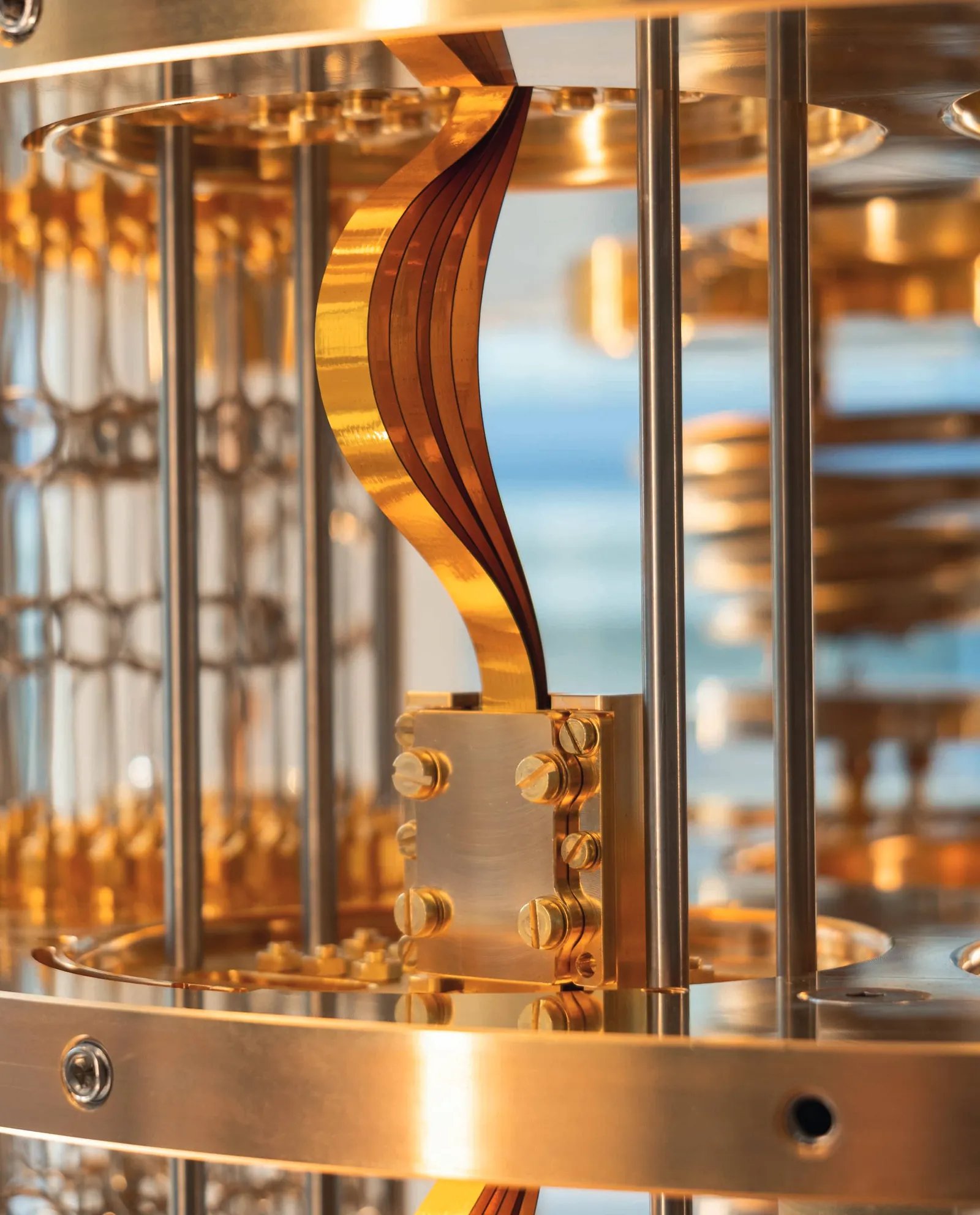
Delft Circuits Cri/oFlex®
Flux bias (1 GHz LPF, –20 dB), microwave drive (8 GHz LPF, –50 dB), signal, readout and pump lines on superconducting flex.
Cri/oFlex®The wiring is the scaling problem
Each superconducting qubit typically needs a drive line and often a flux line, and readout lines are shared across groups of qubits. Multiply by the processor size and the line count, the heat those lines conduct and the space they occupy on each plate become the limit. Superconducting flex with filtering built in addresses all three: Delft Circuits states ten times lower thermal load and 50% higher density than HD coax for its NbTi flex.
Spin qubits in semiconductors work at a different operating point, typically with more DC gate lines. Kiutra publishes a separate X-Type configuration for them, and Delft Circuits lists semiconductor spin qubits among its applications.
Planning a qubit platform?
Tell us the qubit count, the line types and the cooling you have. We will propose cooling and wiring together.