
Applications · trapped ions and optics
Light in, at 5 K
Trapped-ion systems and low-temperature optical experiments need the sample cold, the vacuum extreme and the light path open. That combination is hard to get from a general-purpose cryostat.
Why cryogenic ion traps
Cooling an ion trap to 5 K improves the vacuum by cryopumping and reduces the heating that disturbs the ions' motion, which is why cryogenic traps are common in trapped-ion quantum computing research. The challenge is doing it without losing optical access or adding vibration from the cryocooler.
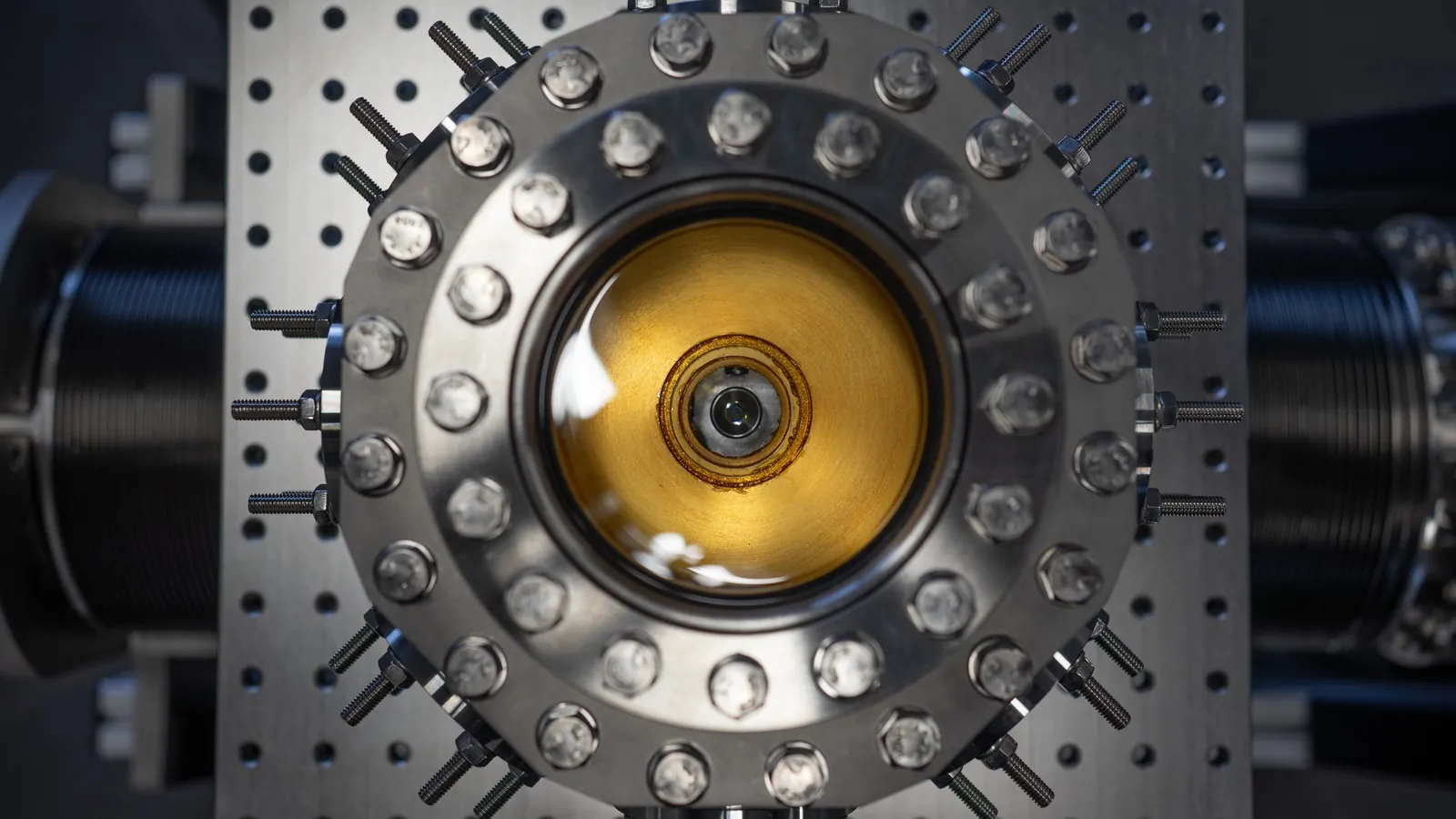
Kiutra's T-Type Optical is built for exactly this: closed-cycle 5 K cooling, metal-sealed XHV vacuum, vibration decoupling and 360° free-beam access, with integrated RF and DC wiring for trap operation and an option for fast trap exchange.
Building a cryogenic optical setup?
Tell us the wavelengths, the access angles and the temperature. We will check the fit with Kiutra.