
cryogenic wire
How to Choose Cryogenic Wire for a Cryostat-Based Experiment
What is cryogenic wire in a cryostat?
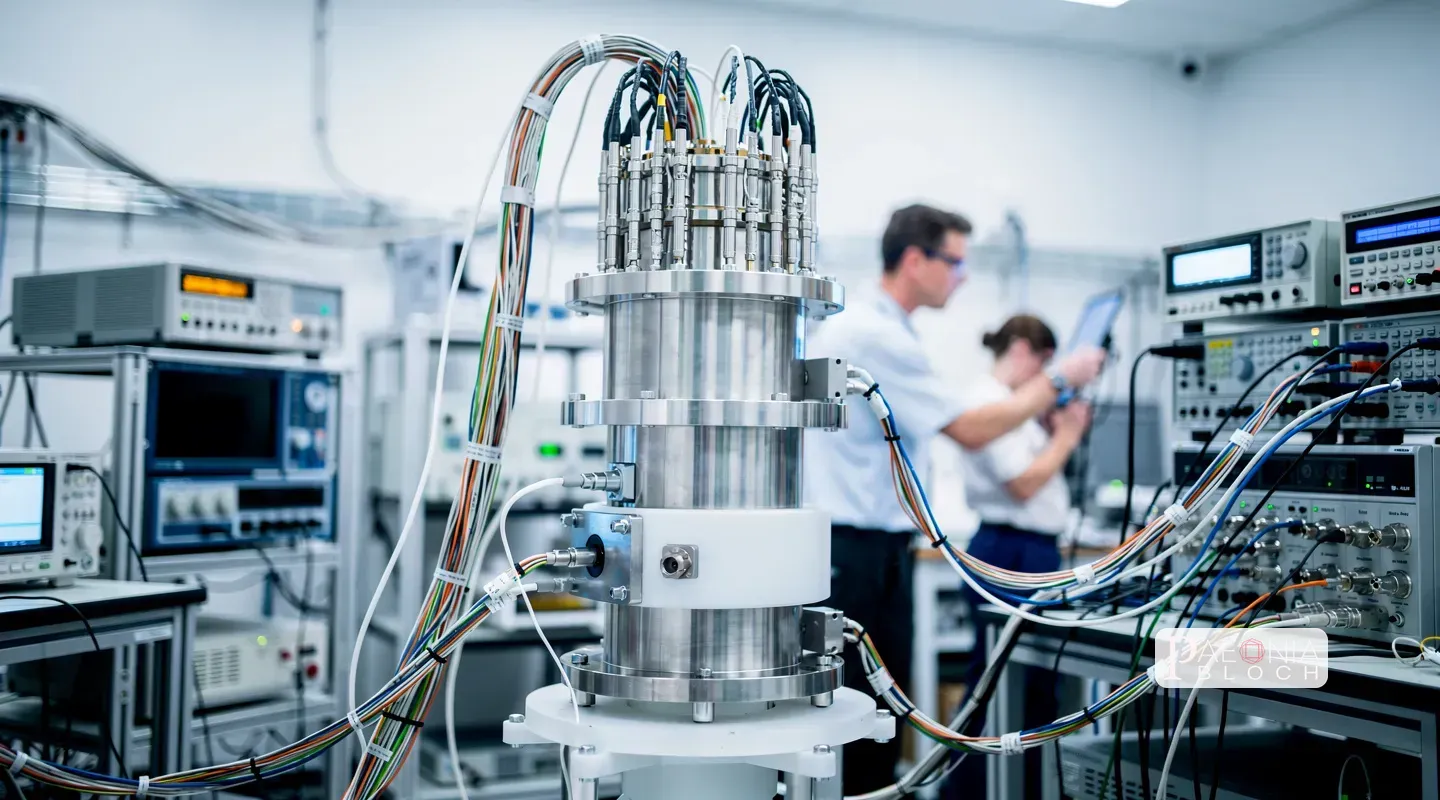
Cryogenic wire is the signal-carrying cable that connects equipment at room temperature to an experiment inside a cold cryostat. In a sub-kelvin cooling system, wiring carries signals from room temperature down to the coldest stage.
A cryostat is a cooled enclosure that holds the experiment at a controlled low temperature. The wiring is part of that enclosure’s working system, not a separate accessory. Every line crosses a large temperature range, passes through connectors or feedthroughs, and takes up space along the route to the experiment. The useful question is therefore not simply which cable has the right connector. It is which wiring configuration matches your cryostat, signals, available cooling power, and experimental layout.
For superconducting qubits and other quantum computing experiments, that distinction affects how you plan the complete installation. We distribute Delft Circuits Cri/oFlex® flexible cryogenic wiring, which carries signals from room temperature down to the coldest stage of a cryostat. We specify it per cryostat and per experiment rather than treating one configuration as suitable for every setup.
Our Cri/oFlex® wiring is used for qubit control and readout. It has eight channels on a 0.3 mm flex, with filtering and attenuation built into the flex.
The right configuration still depends on the cryostat and experiment. Before choosing a cable, identify the required line types and connection arrangement rather than using line count alone.
Why is every signal line also a heat path?
Every signal line into a cryostat is also a path for heat. Control and readout cables conduct heat from the room-temperature end toward the cryogenic end, so the wiring connects the thermal stages as well as the electrical instruments.
That path creates a design tension. Good electrical conductors are typically good thermal conductors, while the cryostat has limited cooling capacity at each stage. The cable must carry the required signal without adding a heat load that the relevant stage cannot handle. As qubit counts increase, the required cooling power also grows, which makes cable heat load part of the capacity discussion rather than a detail to leave until the end.
The effect is cumulative. A small experiment with a few lines and a larger system with many control and readout connections present different routing and thermal-planning questions. The correct comparison is between your line plan and the cooling capacity available at the stages that those lines cross.
Thermalization means bringing a signal line closer to the physical temperature of each stage as it passes through the refrigerator. In a dilution refrigerator, cables are thermally anchored at several stages. Signal lines should be thermalized at each temperature stage, typically with thermal anchors and attenuators.
This arrangement gives you a practical way to discuss wiring with a cryostat supplier: identify which stages the lines cross, what cooling power is available at each stage, and where attenuation or filtering belongs. The exact arrangement depends on the cryostat and experiment. We use those details when we scope Cri/oFlex® wiring for a specific configuration.
How do line count and instrumentation affect the cryostat?
Line count affects more than the number of cables you order. Cryostat wiring requirements depend on the instrumentation and on the number of required instrumentation feedthroughs. Each line also has a function, frequency range, connector, route, and place in the thermal design.
For a superconducting-qubit setup, separate line groups may include DC, RF drive, flux bias, and readout in or out. A detector or another low-temperature experiment may require a different mix. The number of qubits also matters because the required cooling power grows as qubit counts increase. Treat the line list as an early system-design document, not as a final purchasing note.
Use this short inventory before you ask for a wiring configuration:
- Count each line type, such as DC, RF drive, flux bias, or readout.
- Record the frequency range required by each line.
- List the cooling power available at every relevant cryostat stage.
- Mark where attenuation and filtering should sit.
- Record the cryostat connectors and feedthroughs.
- Note whether magnetic fields or ionizing radiation may affect material or instrumentation choices.
The final two points can change the physical choices around the experiment. Magnetic fields or ionizing radiation can affect cryostat material and instrumentation choices, so include them when they apply. We quote matching Delft Circuits systems based on the cryostat model and required lines; a clean inventory makes that discussion more precise.
The cryostat model gives the wiring assessment a fixed physical starting point. It helps identify the relevant connectors, feedthroughs, available space, and expected line arrangement. The required lines then define what must pass through that system.
Send the model and the line list together whenever you have them. If the model is still under review, say so and provide the closest available system details; the configuration still needs to be matched before a quotation is prepared.
What does Cri/oFlex® wiring provide?
The selected product material describes eight channels on a 0.3 mm flex. It also identifies polyimide and Ag/NbTi materials. Those are specific product characteristics, not a general rule that every cryostat should use the same cable. Your cryostat model, line types, connectors, and thermal requirements still determine whether this configuration fits.
Flexible cryogenic cables can place multiple transmission lines side by side on a thin, flexible substrate instead of using one coaxial cable per line. That physical arrangement gives you a different packaging option when the available route or space matters.
We use superconducting conductors in the cold sections of flexible cables to keep electrical loss low while conducting very little heat. The phrase “cold sections” matters: this description applies to those parts of the cable, not automatically to every section or every installation. Ask for the product details that match your temperature stages and signal requirements before you compare configurations.
Cri/oFlex® wiring is therefore a candidate for a specified experiment, not a universal replacement for all cryostat wiring. Eight channels on a 0.3 mm flex may address one line plan while another setup needs different line types, connectors, filtering, or feedthroughs.
We confirm compatibility before quoting. Use the product characteristics to frame your questions, then match them against the actual cryostat and experiment rather than choosing by a single physical feature.
Which details should you collect before specifying wiring?
Collect the cryostat model and the required line list first. Those two details anchor the wiring assessment and the quotation process.
We quote matching Delft Circuits systems based on the cryostat model and required lines, so include both even if some other details are still being finalized.
Add the conditions around the experiment when they can affect material or instrumentation choices. Note magnetic fields, ionizing radiation, unusual material requirements, access limits, and the expected number of cryostats. These conditions can change what belongs near the cold experiment and how the wiring must enter the enclosure.
You do not need to turn this first list into a final engineering drawing. You do need enough information to separate a known requirement from an open question. For example, write down whether the feedthrough type is fixed, whether the frequency range is final, and whether the available cooling power is measured or still estimated.
A useful preparation file can be simple: one page with the cryostat model, a line table, stage temperatures or cooling-power information, connector details, and notes about fields or radiation. Attach the relevant datasheet if you have it.
Our Cri/oFlex® wiring carries signals from room temperature down to the coldest stage, but the route and line arrangement still depend on your system. Use the file to make those system-specific requirements visible before asking for a configuration.
Why must Cri/oFlex® wiring be matched to the cryostat?
Cri/oFlex® wiring must be matched to the cryostat because the same product family can be used in different experiments with different line, connection, and thermal requirements. Wiring is specified per cryostat and per experiment, and compatibility is confirmed before quoting.
A cryostat model establishes the physical and thermal setting. Your experiment establishes the number and type of signals, the required frequency ranges, and the way filtering or attenuation is arranged. The two sets of requirements meet at the wiring configuration. A channel count by itself cannot describe that match.
The matching step also protects against an incomplete comparison. Cryogenic wiring has to limit heat transfer while carrying signals across extreme temperature gradients, and signal lines should be thermalized at the relevant stages. Connector fit, feedthrough count, filtering position, and stage cooling power belong in the same discussion.
Use this boundary when comparing options: choose the configuration that answers your documented cryostat and experiment requirements, not the configuration with the most appealing isolated specification. We confirm compatibility before providing a quotation.
What happens during a tailored wiring assessment?
A tailored wiring assessment starts with your cryostat model and required lines, then connects those details to the manufacturer’s matching configuration. We scope the configuration with the research group and the manufacturer before providing a quotation. Delft Circuits matching systems are quoted based on the cryostat model and required lines.
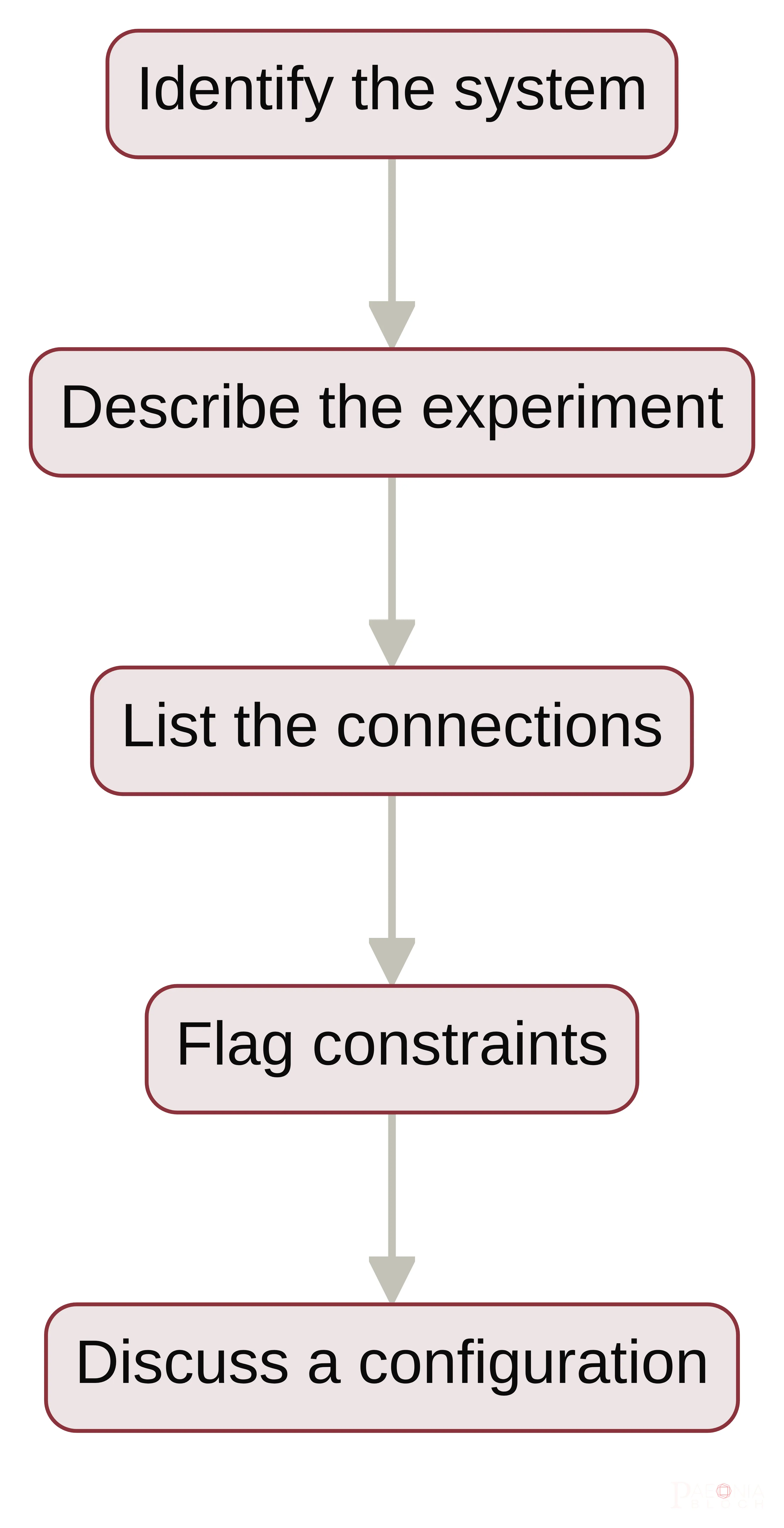
You can prepare for that discussion in four steps:
- Identify the system: Give the cryostat model, manufacturer, and any relevant configuration information.
- Describe the experiment: State whether the lines serve qubit control, readout, bias, detectors, or another low-temperature function.
- List the connections: Provide line counts, frequency ranges, connectors, feedthroughs, and planned attenuation or filtering locations.
- Flag constraints: Include cooling power at each stage and any magnetic-field, radiation, or material requirements.
The result of these steps is a clearer basis for discussing a configuration. It is not a universal wiring recommendation; compatibility still belongs to the specific cryostat and experiment.
We distribute Delft Circuits products in ASEAN, so groups in the region can specify, buy, and get support locally. We are a Singapore company that distributes Delft Circuits Cri/oFlex® flexible cryogenic wiring for low-temperature research.
When you request a quotation or datasheet, include any installation support or training services your team wants to discuss. Bring the technical details first. The product and support discussion can then stay tied to the actual cryostat rather than a generic cable description.
You need only an email address to request a quotation or datasheet from us. Include the cryostat model and required lines in the message if they are available, because those are the details used to identify a matching Delft Circuits system.
If the experiment is still being designed, state which requirements are fixed and which are open. That gives the assessment a clear starting point without treating an early line estimate as a final configuration.
Prepare your cryostat details for a tailored wiring assessment
Cryogenic wire should be chosen from the complete path between your instruments and the cold experiment. Start with the cryostat model, required line types, frequency ranges, cooling power at each stage, attenuation and filtering locations, connectors, and feedthroughs. Then add any magnetic-field, radiation, or material constraints that may affect the configuration.
Our Cri/oFlex® wiring carries signals to the coldest stage and is used for qubit control, readout, and other low-temperature experiments. We specify wiring per cryostat and per experiment, confirm compatibility before quoting, and distribute Delft Circuits products in ASEAN with local support.
Have the cryostat model and line list ready when you request a quotation or datasheet. If some details are pending, label them clearly so the configuration can be assessed against the requirements that are known.
What should you confirm before requesting a configuration?
What is cryogenic wire and how is it used in a cryostat?
Cryogenic wire is the signal-carrying cable that connects room temperature equipment to experiments inside a cryostat. It must carry control, readout, and other signals while fitting the thermal and mechanical layout of the cryostat.
Why do signal lines create a heat path into a cryostat?
Every signal line into a cryostat is a path for heat from the warmer environment toward the cold experiment.
What factors should be considered when specifying wiring for a cryostat?
When specifying wiring, consider the cryostat model, required line types, frequency ranges, cooling power at each stage, and the locations for attenuation and filtering. Additionally, note the connectors and feedthroughs used in the cryostat.
How does Cri/oFlex® wiring differ from other wiring options?
Cri/oFlex® wiring is designed specifically for low-temperature experiments, providing flexibility and the ability to carry multiple transmission lines side by side on a thin substrate. It uses superconducting conductors in cold sections to minimize electrical loss.
What is the process for requesting a tailored wiring assessment?
To request a tailored wiring assessment, provide the cryostat model and required line list. This information helps scope the configuration with the manufacturer before a quotation is prepared.
How can I request a quotation or datasheet for cryogenic wiring?
You can request a quotation or datasheet by providing your email address along with the cryostat model and required lines. If some details are still pending, indicate which requirements are fixed and which are open.
What local support is available for cryogenic wiring in ASEAN?
Paeonia Bloch distributes Delft Circuits products in ASEAN, allowing local groups to specify, buy, and receive support for cryogenic wiring configurations.
Next step
Have a question for Paeonia Bloch?
Kiutra cryostats and Delft Circuits cryogenic wiring
Get in touch